WSEC Energy Credits for Builders | Solar Compliance Guide

A Practical Guide to the 2021 WSEC Credit System for New Construction

A 4-6 kW solar array can deliver up to 4.5 WSEC energy credits, often enough to satisfy most of a new home's additional efficiency requirements at a lower installed cost than comparable HVAC or envelope upgrades. That's the core reason Washington builders are choosing solar as their primary compliance strategy under the 2021 Washington State Energy Code (WSEC-R), which took effect on March 15, 2024.

At Sun's Eye Solar, we've worked with residential builders across Pierce, King, and Thurston counties to design solar systems specifically sized for code compliance, not oversized for maximum capacity. This article breaks down exactly how WSEC energy credits work under Section R406, how solar compares to other compliance options, and why early coordination during the plan-set phase can save you both time and money.

Article by Chris Brooks & Dan Hulse
Chris is a co-owner of Sun’s Eye Solar, has a
Master of Science degree in Renewable Energy from Murdoch University, and is a NABCEP Certified Solar PV Installer. Dan is the co-owner and General Manager of Sun’s Eye Solar in Tacoma, WA, with more than 20 years of experience in the industry.

White house with solar panels on roof, large windows, and outdoor seating area on a grassy lawn.

What Builders Need to Know About WSEC Section R406


The 2021 WSEC requires new residential construction to achieve a minimum number of energy credits beyond prescriptive baseline requirements. The credit threshold depends on home size:

Home Category Conditioned Floor Area Required Credits
Small Dwelling Under 1,500 sq ft 5.0 credits
Medium Dwelling 1,500–5,000 sq ft 8.0 credits
Large Dwelling Over 5,000 sq ft 9.0 credits

These requirements come from WSEC Section R406.3, which provides builders with 29 different options across seven categories: building envelope, air leakage, HVAC equipment, distribution systems, water heating, renewable energy, and appliance packages.

The question every builder faces: Which combination of features delivers the required credits at the lowest cost while minimizing impact on construction timelines?


Why Solar Deserves a Closer Look

Solar photovoltaic (PV) systems sit in Category 6 of Table R406.3—Renewable Electric Energy. Unlike envelope or mechanical upgrades, which require trade coordination and can affect interior layouts, solar installs occur after the roof is complete and before final inspection. The work happens outside the critical path of interior construction. More importantly, the credit-per-dollar math often favors solar over other high-value options.


How the 2021 WSEC Credit System Works


The WSEC uses a two-table system under Section R406:


Table R406.2: Fuel Normalization Credits


This table adjusts your baseline based on the primary heating system. Electric heat pump systems (System Type 4) receive 3.0 credits automatically, a significant head start that can reduce how many additional credits you need from Table R406.3.


For a medium-sized home requiring 8.0 credits total:

  • With electric heat pump: 3.0 credits built-in → Only 5.0 credits needed from other options
  • With gas furnace: 0 credits built-in → Full 8.0 credits needed from other options


Table R406.3: Energy Credits


This table lists 29 specific efficiency measures. Builders select options that, combined with fuel normalization credits, meet the required threshold.


Most options are capped at one selection per category. Solar is different; it scales with system size, up to a maximum of 4.5 credits.

Solar Credit Values: The Numbers


Under WSEC Table R406.3 Option 6.1, solar PV systems earn credits based on modeled annual production:

Annual kWh Generation Credits Earned
600 kWh 0.5 credits
1,200 kWh 1.0 credits
2,400 kWh 2.0 credits
3,600 kWh 3.0 credits
4,800 kWh 4.0 credits
5,400+ kWh 4.5 credits (maximum)

In western Washington, a properly oriented 1 kW solar array produces approximately 1,100–1,200 kWh annually. That means:


  • 1.0–1.5 kW system → Approximately 1.0 credit
  • 2.5–3.0 kW system → Approximately 2.0–2.5 credits
  • 4.5–5.0 kW system → Approximately 4.0–4.5 credits (maximum)


Production must be verified using NREL's PVWatts Calculator or an alternative approved by the local authority having jurisdiction (AHJ).


Real-World Example: A 2,400 Sq Ft Home in Puyallup


A builder working on a medium-sized home (8.0 credits required) planned to use an electric heat pump for the primary heating system.


Credit strategy:

  • Heat pump (System Type 4): 3.0 credits (Table R406.2)
  • High-efficiency heat pump water heater: 2.0 credits (Option 5.6)
  • 3.2 kW rooftop solar array: 2.5 credits (Option 6.1)
  • Smart thermostat: 0.5 credits (Option 3.11)


Total: 8.0 credits — Compliance achieved.


The solar system added approximately $8,000–$9,600 to the build cost (at $2.50–$3.00 per watt for a system this size) while delivering 2.5 credits. Had the builder opted for a larger 4.5 kW array to capture maximum solar credits (4.0+), the total would have been approximately $11,000–$14,000—with the cost per credit actually decreasing due to economies of scale.


Achieving the same 2.5 credits through envelope upgrades (Option 1.4) would have required R-60 ceilings, R-21+16 continuous insulation walls, R-48 floors, and R-20 under-slab insulation—a significantly higher cost with more coordination complexity.

Why Solar Outperforms Other Compliance Options


When evaluated on a cost-per-credit basis, solar consistently ranks among the most efficient paths to WSEC compliance.


High Credit Yield Without Construction Friction


Solar doesn't affect interior layouts, HVAC duct sizing, or finish selections. It installs after roofing and before the final, keeping it off the critical path.


Compare this to achieving 1.5 credits through air leakage control (Option 2.2), which requires a tested air leakage of 1.5 ACH50 and a heat recovery ventilation system with 75% sensible efficiency. That path involves blower door testing, specialized ventilation equipment, and careful coordination of air sealing throughout the build.


Predictable Energy Modeling


Solar production is straightforward to model. PVWatts requires only location, system size, tilt, azimuth, and shading factors. The output is a single annual kWh number that maps directly to credits.


Other efficiency measures (particularly envelope upgrades) require Total UA calculations using Section R402.1.5, with multiple insulation specifications and component-by-component verification.


Marketable Homeowner Benefit


A high-efficiency furnace is invisible after installation. A solar array is a visible, marketable feature that directly reduces the homeowner's utility bills. Buyers in King, Pierce, and Snohomish counties increasingly expect solar-ready or solar-installed new construction.


According to research from Lawrence Berkeley National Laboratory, homes with solar sell for premiums averaging $4 per watt of installed capacity, potentially $16,000–$20,000 for a 4–5 kW system.


Alignment with Washington's Electrification Goals


Washington's Clean Energy Transformation Act (CETA) requires 100% clean electricity by 2045. New construction designed with solar, battery-ready electrical panels, and EV charging infrastructure positions these homes for long-term regulatory alignment and resale value.
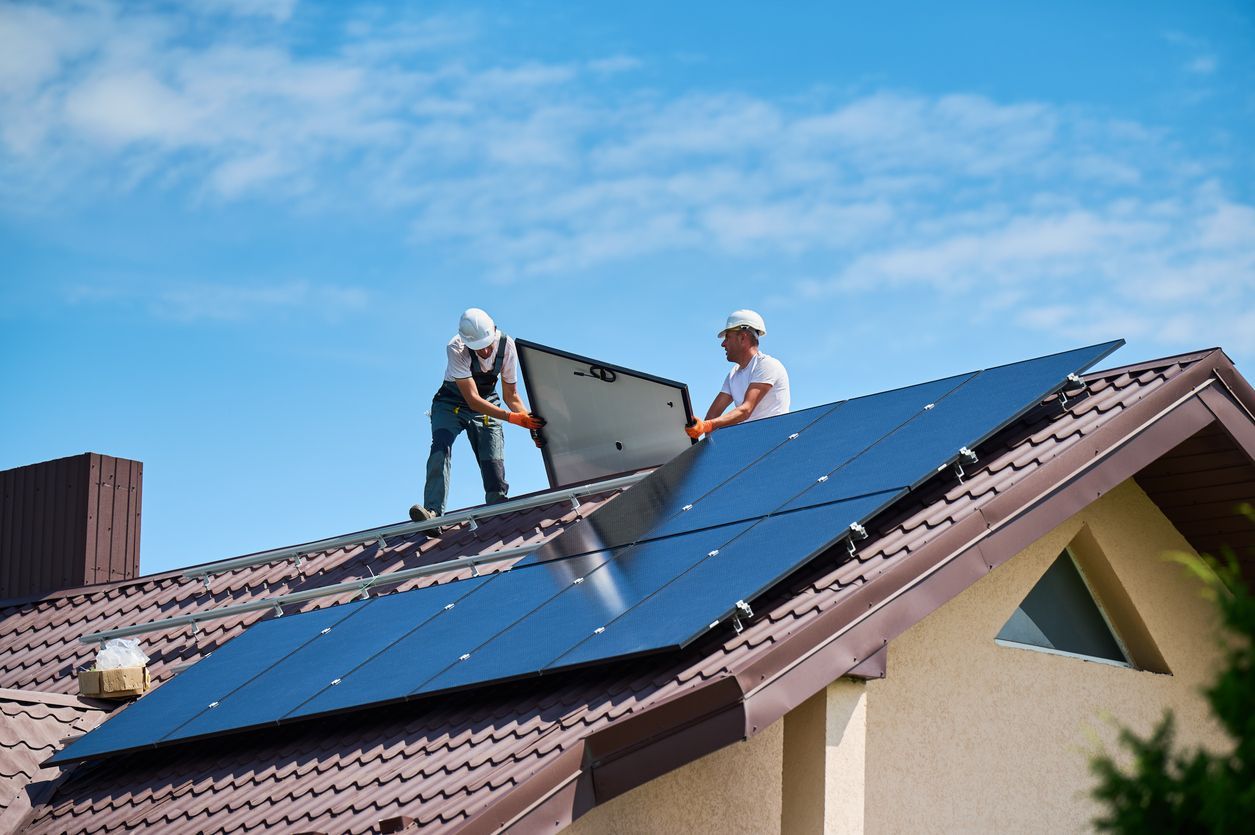
Two workers installing solar panels on a brown roof under a blue sky.

WSEC Compliance Comparison Table


The following table compares four common approaches to achieving 1.0 WSEC energy credit:

Compliance Option Credits Typical Cost Construction Impact Marketability
Solar PV (1.2 kW) 1 $4,000–$5,500 Low — installs post-roofing High — visible, reduces bills
Envelope (Option 1.2) 1 $5,000–$8,000 Medium — affects framing, windows Low — invisible to buyers
Air Sealing + HRV (Option 2.1) 1 $6,000–$9,000 High — requires testing, coordination Low — invisible to buyers
Heat Pump Water Heater (Option 5.6) 2 $3,500–$5,000 Low — equipment swap Medium — utility savings

Note: Costs are approximate and vary by project. The heat pump water heater delivers 2.0 credits, making it an efficient option when combined with solar.


Important: Solar costs scale favorably with system size. A small 1.2 kW system may cost $3.50–$4.50 per watt, but larger systems designed to capture maximum credits (4.5) typically drop to $2.50–$3.00 per watt. This means a 4.5 kW system delivering 4.0+ credits might cost $11,000–$14,000 total—often less per credit than stacking multiple smaller efficiency upgrades.

How Solar Fits Your Compliance Strategy


Solar can function as a primary credit source, a balancing tool, or a design simplifier, depending on your preferred construction approach.


Primary Credit Source


For builders already using electric heat pumps (3.0 credits) and heat pump water heaters (2.0 credits), a 3–4 kW solar array can provide the remaining 3.0–4.0 credits needed for medium- or large-sized homes. This approach minimizes envelope complexity.


Balancing Tool


Some designs (large window areas, complex roof geometries, or client requests for specific finishes) make it difficult to achieve envelope credits. Solar offsets these constraints without requiring redesign.


Design Simplifier


Instead of stacking multiple small upgrades (smart thermostat, appliance package, distribution upgrades), a single solar array can consolidate credit needs into a single line item with a single subcontractor relationship.


The most effective approach depends on the specific home's size, orientation, roof geometry, and mechanical system selections. That's why we recommend discussing solar during the plan-set phase—not after permits are issued.


Builder-Focused Solar Design: What Makes New Construction Different


Solar for new construction is not the same as residential retrofit solar. Retrofits work around existing roof conditions, electrical panels, and utility interconnections. New construction offers a blank slate, but only if solar is integrated into the design early.


Plan-Set Integration


We review architectural and electrical plans before permit submission to ensure solar layouts align with:


  • Roof geometry and setback requirements
  • Structural loading (panels add approximately 3–4 lbs. per square foot)
  • Electrical panel location and main service sizing
  • Conduit pathways for future battery or EV charging additions


This coordination prevents change orders and inspection delays.


Code-Driven System Sizing


We size systems to meet WSEC credit targets efficiently. A home needing 2.5 credits doesn't require a 10 kW system; a properly designed 3.2 kW array achieves compliance at lower cost.


Permit-Ready Documentation


Our designs include the PVWatts output, single-line diagrams, and equipment specifications required by local AHJs across Washington. We coordinate regularly with the Pierce, King, Thurston, and Snohomish County permit offices.


Builder-Grade Pricing


We offer pricing structures designed for repeat builders and developers, supporting predictable budgets across multiple homes or development phases.
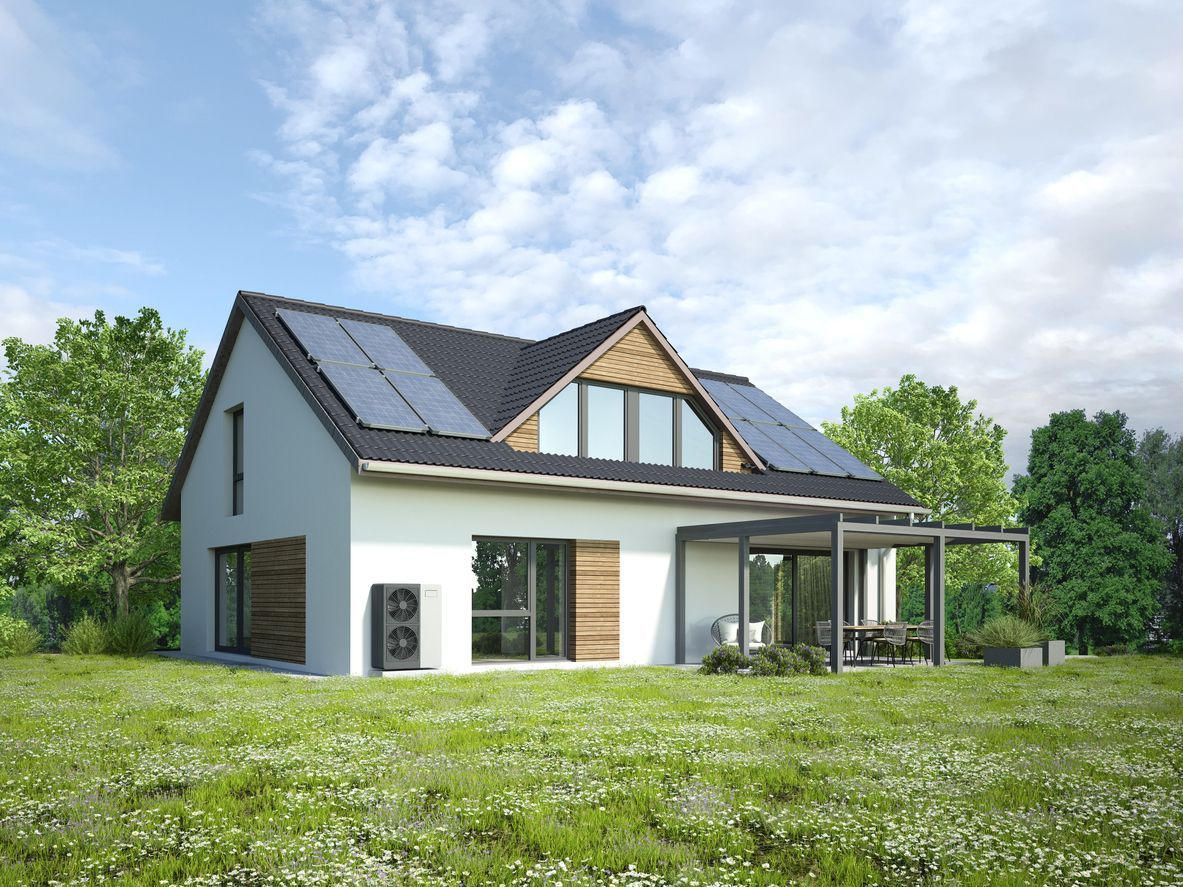
Modern house with solar panels on roof, surrounded by green grass and trees.

Common Questions Builders Ask About WSEC Solar Credits


Does every new home need solar to meet WSEC?

No. Solar is one of 29 options in Table R406.3. However, for many projects (particularly those already using electric heat pumps), solar offers the lowest cost per credit with minimal construction impact.


How large does the solar system need to be?

That depends on your credit gap. If you need 2.0 credits from solar, a 2.2–2.5 kW system modeled through PVWatts will typically achieve that target. We size systems to compliance thresholds, not maximum roof capacity.


Can solar replace other efficiency features?

Yes. If solar provides 4.0 credits, you may not need envelope upgrades, advanced air sealing, or appliance packages. The code allows flexibility in how you reach your total.


What about roof aesthetics or HOA requirements?

System layout, panel placement, and low-profile mounting options can address most design concerns when planned early. We work with architects to integrate solar into the home's visual design—not bolt it on as an afterthought.


How does this affect the homeowner's federal tax credit?

The Residential Clean Energy Credit provides a 30% tax credit on solar installations through 2032. For a $12,000 system, that's $3,600 back to the homeowner. This benefit strengthens solar's value proposition at resale.


Solar as a Selling Feature, Not Just a Code Requirement


Beyond compliance, solar adds tangible market value to new homes. Washington buyers increasingly prioritize energy efficiency, not just as a cost-savings measure, but as a signal of quality construction and environmental responsibility.


A code-compliant solar installation positions the home as:


  • Lower operating cost — Reduced monthly utility bills from day one
  • Future-ready — Pre-wired for battery storage and EV charging
  • Policy-aligned — Consistent with Washington's clean energy trajectory


Builders who integrate solar early can market it as an intentional design choice rather than a last-minute compliance fix. That distinction matters to buyers comparing multiple new construction options in competitive markets like Tacoma, Olympia, and the Seattle suburbs.


Why Builders Partner with Sun's Eye Solar


We operate as a technical partner for Washington builders, not just an installer.


  • Deep expertise in WSEC Section R406 — We understand credit calculations, fuel normalization, and option interactions
  • Local permitting experience — We work regularly with AHJs in Pierce, King, Thurston, and Snohomish counties
  • Professional installations — Clean work that meets inspection standards the first time
  • Timeline alignment — We schedule installations to match your construction sequence, not our availability


Our team specializes in advanced residential energy systems: solar, battery storage, smart panels, and EV infrastructure. We design with Washington's electrification trajectory in mind, even when the immediate goal is WSEC compliance.


Next Steps: Get a WSEC Solar Compliance Review


If you're planning new residential construction in Washington and want a clear, cost-effective path to WSEC compliance, solar should be part of the conversation from the plan-set phase.


Sun's Eye Solar offers WSEC-focused solar design reviews for builders, architects, and developers. We evaluate your plans, identify the most efficient credit strategy, and deliver permit-ready solutions that keep projects moving.

Schedule a Code Compliance Review →

FAQs

  • Q: Does every new home need solar to meet WSEC?

    A: No. Solar is one of 29 options in Table R406.3. However, for many projects—particularly those already using electric heat pumps—solar offers the lowest cost per credit with minimal construction impact.


  • Q: How large does the solar system need to be?

    A: That depends on your credit gap. If you need 2.0 credits from solar, a 2.2–2.5 kW system modeled through PVWatts will typically achieve that target.


  • Q: Can solar replace other efficiency features?

    A: Yes. If solar provides 4.0 credits, you may not need envelope upgrades, advanced air sealing, or appliance packages. The code allows flexibility in how you reach your total.


  • Q: How does this affect the homeowner's federal tax credit?

    A: The Residential Clean Energy Credit provides a 30% tax credit on solar installations through 2032.


By Dan Hulse March 19, 2026
SPAN Panel replaces your traditional breaker box with a circuit-level energy management system that provides real-time monitoring and smartphone control of all 32 circuits—allowing you to remotely shut off individual circuits (forgotten iron, garage lights), prioritize backup power during outages by categorizing circuits as Must Have, Nice to Have, or Not Essential, and avoid expensive electrical service upgrades through intelligent load management (PowerUp technology) that automatically manages appliances when power demand exceeds your 200-amp service capacity. For electrification-forward homeowners in Pierce, King, and Snohomish counties planning solar installations, battery storage, EV charging, heat pump conversions, or whole-home remodels, SPAN Panel serves as the central electrical hub that integrates and manages these systems through a single smartphone interface. Sun's Eye Solar provides certified SPAN installation services that position your home's electrical foundation for electrification upgrades—eliminating the need for costly utility service upgrades (average wait time: 18 months) and providing granular control over energy consumption, backup power allocation, and appliance prioritization. Table of Contents 1. What Makes SPAN Panel Different from Traditional Electrical Panels 2. Circuit-Level Energy Monitoring and Control 3. PowerUp Technology: Avoid Electrical Service Upgrades 4. Intelligent Backup Power Management 5. Solar, Battery, and EV Charger Integration 6. Heat Pump and Electrification Compatibility 7. SPAN Installation Process and Certification Requirements 8. Cost Analysis: SPAN vs. Traditional Panel Upgrades 9. Common Questions About SPAN Panel 10. Next Steps: SPAN Installation Consultation What Makes SPAN Panel Different from Traditional Electrical Panels Traditional electrical panels function as passive distribution boxes: circuit breakers protect wiring from overloads, but provide zero visibility into power consumption, no remote control capability, and no intelligence about how energy is being used. When you want to turn off a circuit, you walk to the panel and flip a breaker manually. When power goes out, a fixed sub-panel determines which circuits receive backup power—you can't adjust priorities remotely during an extended outage. SPAN Panel transforms your electrical panel into an active energy management system with embedded sensors, relays, processing power, and wireless connectivity built into the backplate behind standard circuit breakers. Core SPAN Capabilities Traditional Panels Lack Real-time power monitoring: See exactly how many watts each circuit is drawing at any moment through the SPAN Home app Remote circuit control: Turn any circuit on or off from your smartphone, even when you're away from home Energy consumption insights: Track daily/monthly energy usage by circuit to identify high-consumption appliances Dynamic load management: Automatically prevent service panel overloads by temporarily reducing power to non-critical circuits Flexible backup power: Reconfigure which circuits receive battery backup during outages without rewiring Safety alerts: Receive notifications for abnormal power draw patterns that might indicate electrical problems Voice control: Integration with Amazon Alexa for voice-activated circuit management Technical Specifications Service rating: 200-amp main breaker with 225-amp bus Circuit capacity: 32 individually monitored and controlled circuits per panel (expandable with multiple panels for homes requiring 400A service) Breaker compatibility: Accepts standard 1-inch residential circuit breakers from major manufacturers I nstallation location: NEMA 3R rated for indoor or outdoor mounting Connectivity: Wi-Fi, Ethernet, Bluetooth, and 4G/LTE cellular (Wi-Fi recommended for primary connection) Safety certification: UL 3141 Power Control System (PCS) certified—first smart panel to meet this rigorous safety standard required by 2026 NEC Warranty: 10-year manufacturer warranty Circuit-Level Energy Monitoring and Control SPAN Panel's circuit-level granularity provides homeowners with visibility and control impossible with traditional electrical panels. Each circuit's power draw is monitored in real-time through embedded sensors, displayed in the SPAN Home app as both instantaneous wattage and accumulated kilowatt-hour consumption. Real-World Control Scenarios Scenario 1: Forgotten Appliances You're at work and realize you left the garage lights on. Open the SPAN Home app, navigate to the garage lighting circuit, and turn it off remotely. Alternatively, use voice command: "Alexa, turn off garage lights circuit." Scenario 2: Vampire Power Identification Your monthly energy bill is higher than expected. Review SPAN's circuit-level consumption data and discover the basement entertainment center circuit is drawing 150 watts continuously—even when "off." Identify the culprit devices (cable box, gaming console in standby mode) and either unplug them or configure SPAN to automatically shut off that circuit at night. Scenario 3: Scheduled Circuit Management Set schedules for specific circuits. Example: Pool pump circuit runs 6 hours daily (10 AM–4 PM) during off-peak hours to minimize demand charges. SPAN automatically energizes and de-energizes the circuit without manual intervention. Energy Consumption Analytics The SPAN Home app provides consumption breakdowns showing: Circuit rankings: Identify highest-consuming circuits (typically HVAC, electric water heater, electric dryer) Time-of-use patterns: See when energy consumption peaks (morning/evening for most homes) Monthly comparisons: Track consumption trends over time to measure impact of behavioral changes or efficiency improvements Cost allocation: SPAN estimates the cost impact of each circuit based on your utility rate (when connected to PSE or other utility rate data) PowerUp Technology: Avoid Electrical Service Upgrades One of SPAN's most financially valuable features: PowerUp intelligent load management allows homes to add high-power appliances (EV chargers, heat pumps, induction ranges) without upgrading electrical service from 200A to 400A—a process that typically costs $15,000–$25,000 and requires 12–18 months of utility coordination. How PowerUp Works Traditional electrical service calculations use peak demand sizing : add up the maximum possible load of all circuits and ensure the service panel can handle that theoretical maximum simultaneously. This conservative approach often requires service upgrades when adding major appliances, even though actual simultaneous usage is rare. PowerUp uses real-time load management : SPAN continuously monitors total power draw across all circuits. When demand approaches the 200A service capacity (approximately 48 kW at 240V), PowerUp temporarily reduces power to pre-configured "managed" circuits—typically high-draw but non-critical loads like: EV chargers (can slow charging rate from 48A to 24A) Electric water heaters (delay heating cycle by 30–60 minutes) Pool pumps and hot tub heaters Electric dryers (defer start or reduce heating element power) PowerUp Example: Adding Level 2 EV Charger Scenario: Home with 200A electrical service, existing 5-ton heat pump (20A draw), electric water heater (20A), and typical household loads (30–40A baseline). Homeowner purchases electric vehicle and wants to install 48A Level 2 charger. Traditional approach: Peak load calculation: Heat pump (20A) + water heater (20A) + EV charger (48A) + baseline (40A) = 128A Still within 200A service capacity, but utility may require load calculation review Risk: Future additions (induction range, second EV) would trigger mandatory service upgrade SPAN PowerUp approach: Configure EV charger as "managed circuit" in SPAN app If total home load exceeds 160A (80% of service capacity), SPAN automatically reduces EV charger to 24A Result: No service upgrade required. Car still charges overnight (typical 8-hour charging window provides ~50 kWh even at reduced rate) Cost savings: $15,000–$25,000 (avoided service upgrade) Intelligent Backup Power Management Traditional backup power systems require electricians to hardwire a critical loads sub-panel containing only the circuits you want powered during outages. Once installed, changing which circuits receive backup power requires expensive electrical work—rewiring circuits from the main panel to the backup panel. SPAN eliminates the backup sub-panel entirely. All circuits remain in the main SPAN Panel, and you configure backup priorities through software—reconfigurable at any time without additional electrical work. SPAN Backup Priority Categories In the SPAN Home app, categorize each circuit as: Must Have: Circuits that remain powered during outages (refrigerator, medical equipment, well pump, internet router, garage door opener) Nice to Have: Circuits powered when battery capacity allows (lighting, TV, microwave, outlets) Not Essential: Circuits automatically disabled during outages to conserve battery (electric water heater, pool pump, landscape lighting, guest bedroom outlets) Dynamic Load Shedding During Extended Outages SPAN continuously calculates remaining backup runtime based on current battery state of charge and real-time power consumption. The app displays: "Battery will last 18 hours at current usage." As battery capacity decreases, SPAN automatically sheds loads in reverse priority: 100%–50% battery: All Must Have + Nice to Have circuits powered 50%–20% battery: Automatically disable Nice to Have circuits; maintain Must Have circuits only Below 20% battery: User receives low battery warning via app notification; can manually disable additional Must Have circuits remotely to extend remaining runtime Backup Runtime Extension: Real-World Example Scenario: 13.5 kWh battery (Tesla Powerwall 3 or 2× Enphase IQ Battery 5P), winter storm outage, home consuming 1.5 kW average (refrigerator + lights + internet + TV) Without SPAN load shedding: All circuits powered until battery depletes: 13.5 kWh ÷ 1.5 kW = 9 hours runtime Once battery reaches minimum reserve (typically 10–20%), entire home loses power simultaneously With SPAN intelligent load shedding: Hours 0–6: All Must Have + Nice to Have circuits powered (1.5 kW average) Hours 6–12: SPAN disables Nice to Have circuits (TV, extra lighting), reducing load to 800W Hours 12–18: User receives notification, remotely disables additional circuits (reduces to 400W—refrigerator + internet only) Total runtime: 18+ hours instead of 9 hours—double the backup duration through intelligent circuit management Solar, Battery, and EV Charger Integration SPAN Panel integrates with all major residential energy systems through direct communication protocols and CT (current transformer) monitoring: Solar Integration SPAN monitors solar production in real-time through CTs installed on solar inverter output circuits. The app displays: Current solar production: Live wattage being generated Energy flow visualization: See solar energy flowing to home loads, battery charging, or grid export Self-consumption tracking: Percentage of solar production used directly by home vs. exported to grid Production history: Daily/monthly solar generation totals Compatible with all solar inverter brands: Enphase microinverters, SolarEdge, Tesla Powerwall integrated inverter, Generac PWRcell, string inverters from SMA, Fronius, etc. Battery Storage Integration SPAN communicates directly with home battery systems to provide: State of charge (SOC) percentage: See battery capacity in real-time Runtime calculator: SPAN translates battery percentage into practical backup duration: "Battery will power Must Have circuits for 14 hours at current usage" Charging/discharging status: Monitor battery charging from solar or grid, discharging to home loads Operating mode control: Some battery systems allow SPAN to adjust operating modes (self-consumption, time-based control, backup-only) Certified battery integrations: ✓ Tesla Powerwall (2, +, and 3) ✓ Enphase IQ Battery (3T, 10T, 5P) ✓ FranklinWH aPower ✓ LG Chem RESU ✓ SolarEdge Energy Bank ✓ Generac PWRcell EV Charger Integration SPAN Drive is the company's proprietary Level 2 EV charger designed for seamless SPAN Panel integration. When paired together: Smart charging: Schedule EV charging during off-peak electricity hours or when solar production is high Dynamic power allocation: SPAN Drive automatically adjusts charging rate based on available capacity (can charge at full 48A when home load is low, reduce to 24A when other appliances are running) Solar-optimized charging: Increase charging rate when excess solar production is available Remote control: Start/stop charging sessions from SPAN Home app Third-party EV charger compatibility: SPAN Panel also works with ChargePoint, JuiceBox, Wallbox, and other Level 2 chargers—though without the same depth of integration as SPAN Drive Common Questions About SPAN Panel Q: How much does SPAN Panel cost installed? A: SPAN Panel hardware costs $3,500 (manufacturer retail price). Professional installation typically adds $2,000–$4,000 depending on: Panel location (outdoor installation requires weatherproof enclosure and conduit) Existing panel condition (if old panel has aluminum wiring, knob-and-tube, or Federal Pacific breakers, additional remediation may be required) Permit and inspection fees (vary by jurisdiction) Integration complexity (solar/battery/EV system commissioning) Total installed cost: $5,500–$7,500 typical range Federal tax credit: SPAN Panel qualifies for a $600 tax credit under the Energy Efficient Home Improvement Credit (26 USC 25C) when installed as part of a qualifying home improvement project Q: Can SPAN Panel replace my existing panel, or does it require a new installation? A: SPAN Panel is a direct replacement for traditional electrical panels. The installation process: Disconnect utility power at meter (coordination with PSE required) Remove existing panel Mount SPAN Panel in same location (or new location if desired) Transfer all existing circuits to SPAN Panel with new breakers Commission SPAN system through app (requires SPAN-certified installer) Typical installation time: 3–8 hours Q: Does SPAN Panel work with existing solar and battery systems? A: Yes. SPAN integrates with existing solar inverters and battery systems through current transformer monitoring and direct communication protocols. No modifications to existing solar or battery equipment are required—SPAN connects to your electrical panel and communicates with these systems to provide unified monitoring and control. Q: What happens if my internet connection fails? Can I still control circuits? A: SPAN Panel continues functioning during internet outages. Backup power priorities and load management settings remain active. However, you lose remote monitoring and control via the app until internet connectivity is restored. Local control is available via Bluetooth connection when within range of the panel. Next Steps: SPAN Installation Consultation If you're planning solar installation, battery storage, EV charging infrastructure, heat pump conversion, or a whole-home remodel, SPAN Panel provides the intelligent electrical foundation that integrates and manages these systems through smartphone control—eliminating expensive electrical service upgrades and providing granular visibility into energy consumption. Sun's Eye Solar provides certified SPAN installation services including: ✓ Electrical load analysis and circuit planning ✓ PowerUp configuration for major appliance additions ✓ Backup power priority design ✓ Solar, battery, and EV charger integration ✓ Complete permitting and PSE coordination ✓ Professional installation by SPAN-certified electricians ✓ SPAN Home app commissioning and training ✓ Federal tax credit documentation support ✓ 10-year warranty administration Contact Sun's Eye Solar to schedule a SPAN Panel consultation. We'll assess your current electrical service, review your electrification plans, design a smart electrical system optimized for your home's energy goals, and provide transparent pricing showing exactly how SPAN positions your home for future energy independence.
By Dan Hulse March 17, 2026
Modular Energy Storage, 25-Year Microinverter Reliability, and Professional System Upgrades Enphase IQ Battery 5P delivers 5 kWh of usable capacity with 3.84 kW continuous power and 7.68 kW peak output—backed by an industry-leading 15-year, 6,000-cycle warranty—and connects seamlessly to existing Enphase microinverter systems without requiring a separate battery inverter. This modular architecture allows homeowners to start with a single 5 kWh unit (approximately $8,000–$9,000 installed) and expand storage capacity incrementally as energy needs grow by adding additional IQ Battery units, with each battery communicating through the existing Enphase ecosystem via the IQ System Controller. For homeowners in Pierce, King, and Snohomish counties with existing Enphase microinverter solar systems—or those evaluating modular battery storage that scales with future needs—Sun's Eye Solar provides certified Enphase installation services for IQ8 microinverters, IQ Battery systems, and complete solar-plus-storage retrofits. This article explains why Enphase's distributed architecture delivers superior reliability compared to centralized inverters, how modular battery systems provide cost-effective capacity expansion, and what professional Enphase certification means for system performance, warranty protection, and remote diagnostics. Table of Contents 1. Why Microinverter Architecture Matters: Reliability Through Distributed Design 2. Enphase IQ8 Microinverter Lineup: Model Specifications and Selection 3. IQ Battery Systems: Modular Storage That Grows With Your Needs 4. Enphase Product Comparison: Batteries and Microinverters 5. Retrofit and Upgrade Pathways for Existing Solar Homeowners 6. Why Enphase Certification Matters for Your Installation 7. Remote Monitoring and Diagnostic Capabilities 8. PSE Flex Battery Enrollment for Enphase Systems 9. Common Questions About Enphase Systems 10. Next Steps: Enphase System Consultation Why Microinverter Architecture Matters: Reliability Through Distributed Design Traditional solar systems use a single string inverter —a centralized unit typically mounted on an exterior wall or in a garage that converts DC power from all solar panels into AC power for home use. While this architecture works, it creates a single point of failure: if the string inverter fails, the entire solar array stops producing power until repairs are completed. Enphase pioneered microinverter technology —a distributed architecture where each solar panel has its own dedicated inverter attached directly to the panel mounting rail. This panel-level power conversion delivers three critical advantages: 1. System Resilience: Eliminating Single Points of Failure When one microinverter experiences a failure (Enphase reports a 0.05% annual failure rate), only that single panel is affected. The remaining panels continue producing power normally. In contrast, string inverter failures disable the entire array. Real-world impact: • 25-panel Enphase system with 1 failed microinverter: 96% of system capacity remains operational • 25-panel string inverter system with failed inverter: 0% of system capacity operational until repair • Average repair timeline: Microinverter replacement takes 1–2 hours; string inverter replacement can take 1–2 weeks including parts procurement 2. Panel-Level Power Optimization String inverters operate at the performance level of the weakest panel in the series circuit. If one panel experiences shading, soiling, or debris coverage, the entire string's output drops to match that lowest-performing panel. Microinverters optimize each panel independently. Shading on one panel affects only that panel's output—the rest of the array maintains peak production. Production improvement scenarios: • Partial shading (morning/afternoon tree shadows): Microinverters deliver 10–25% more annual production compared to string inverters • Complex roof configurations (multiple orientations): Microinverters allow mixing east-, south-, and west-facing panels on the same system without performance penalties • Module mismatch tolerance: Can add panels of different wattages to existing arrays (useful for system expansions when original panel models are discontinued) 3. Enhanced Safety: Rapid Shutdown Compliance National Electrical Code (NEC 2017 and later) requires rapid shutdown functionality that de-energizes DC wiring within 30 seconds during emergencies—protecting firefighters and service technicians from high-voltage DC circuits. Enphase IQ8 microinverters provide inherent rapid shutdown: when AC grid power is disconnected (utility shutdown, emergency shutoff, or grid failure), microinverters stop converting DC to AC within milliseconds. DC voltage on the roof drops to safe levels (individual panel voltage of 30–50V) without additional rapid shutdown devices. Enphase IQ8 Microinverter Lineup: Model Specifications and Selection Enphase offers five IQ8 microinverter models, each optimized for specific solar panel wattages and cell configurations. Selecting the correct model ensures maximum energy harvest and prevents premature microinverter saturation.